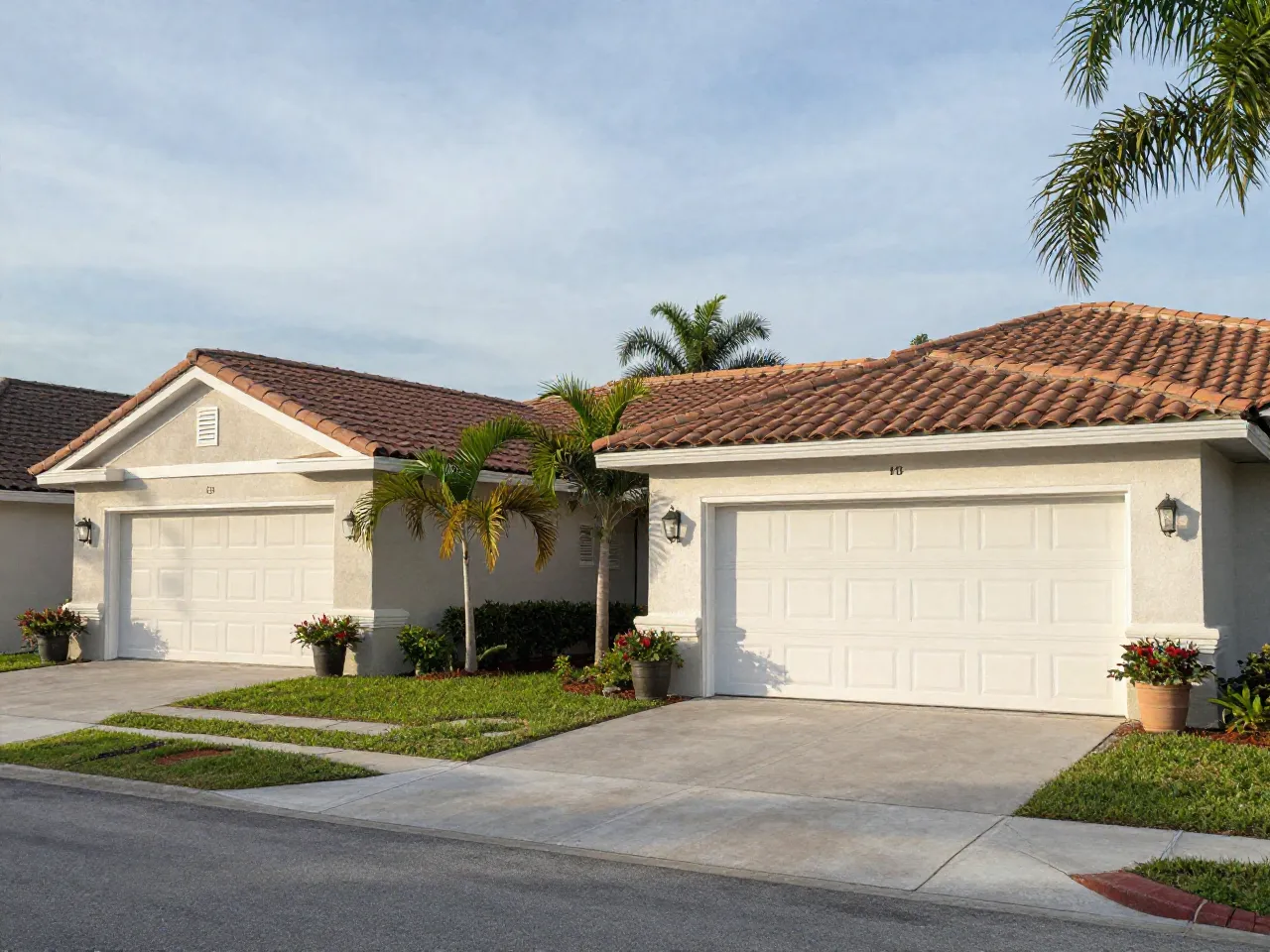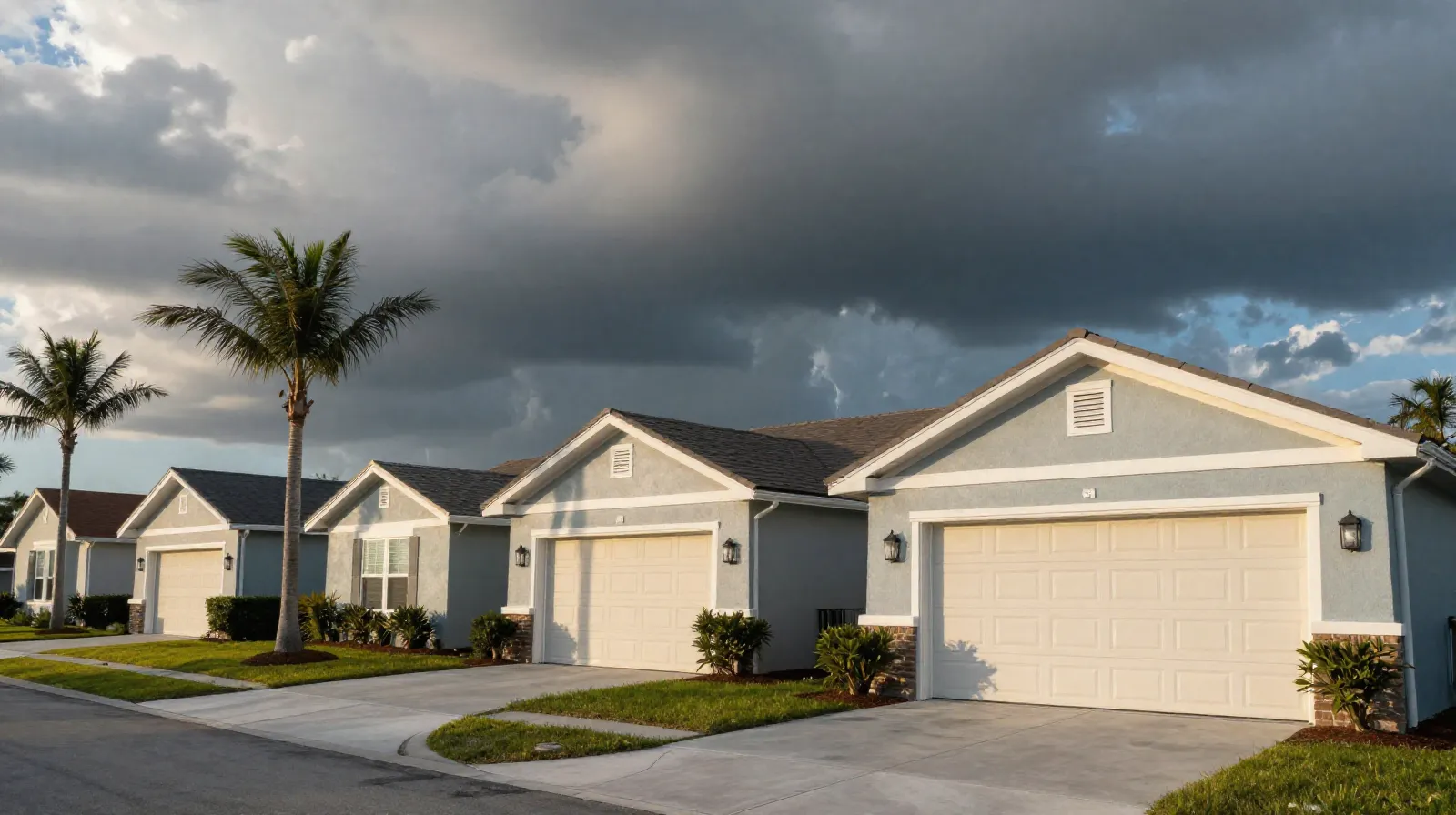

Garage door rust and Tampa Bay salt air.
Garage door rust is a steady problem in Tampa Bay, because salt air from the bay and the Gulf settles on metal and the humidity never really leaves. Most of it starts small. A little care each season slows it down, and knowing which rust to leave alone keeps you safe.
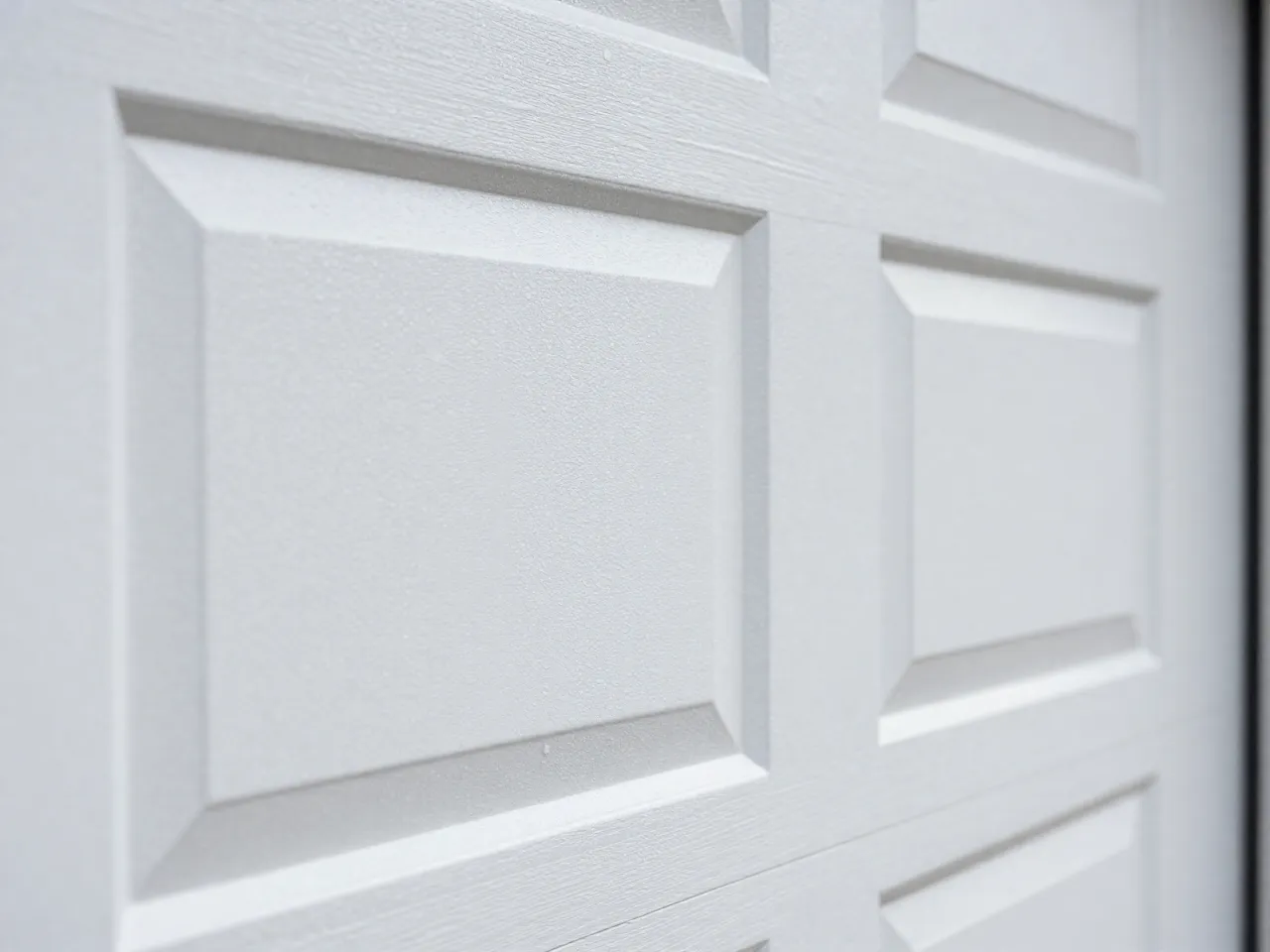
The short answer. Garage door rust in Tampa Bay comes from salt air and constant humidity working on bare or scratched steel. You can rinse, wash and dry the door, clean the bottom seal and touch up paint on the panels. Rust on springs, cables or bottom brackets is different. Look, do not touch, and ask a technician to check it.
Why garage door rust moves fast in Tampa Bay.
Rust needs three things. It needs bare iron or steel, water and oxygen. Tampa Bay supplies the water every day of the year. Summer air is heavy and wet, afternoon storms soak everything, and even the cooler months bring damp mornings and dew on the driveway.
Salt makes it worse. Wind off the bay and the Gulf carries fine salt spray inland, and it settles on your door, the tracks and the hardware. Salt holds moisture against the metal and helps the chemical reaction along. That is why corrosion often looks worse on homes near the water in St. Petersburg, South Tampa, the Apollo Beach area and the coastal parts of Pinellas County.
Homes further inland are not free of it. Brandon, Riverview, Lutz and Wesley Chapel still get high humidity, heavy rain and wind from passing storms. The rust may come on more slowly there, but the same parts tend to go first.
What speeds it up on your door
- Scratches and chips in the paint, which leave bare steel open to the air.
- Water that sits along the bottom edge or pools at the base of the tracks.
- Salt spray and sand that dry on the door and never get rinsed off.
- A closed, humid garage with little air moving through it.
- Sprinklers that hit the door every morning.
None of this means your door will fail soon. It means rust is something to watch, not something to ignore. If you are near the water, our page on garage door repair in St. Petersburg covers more about how coastal homes there wear.
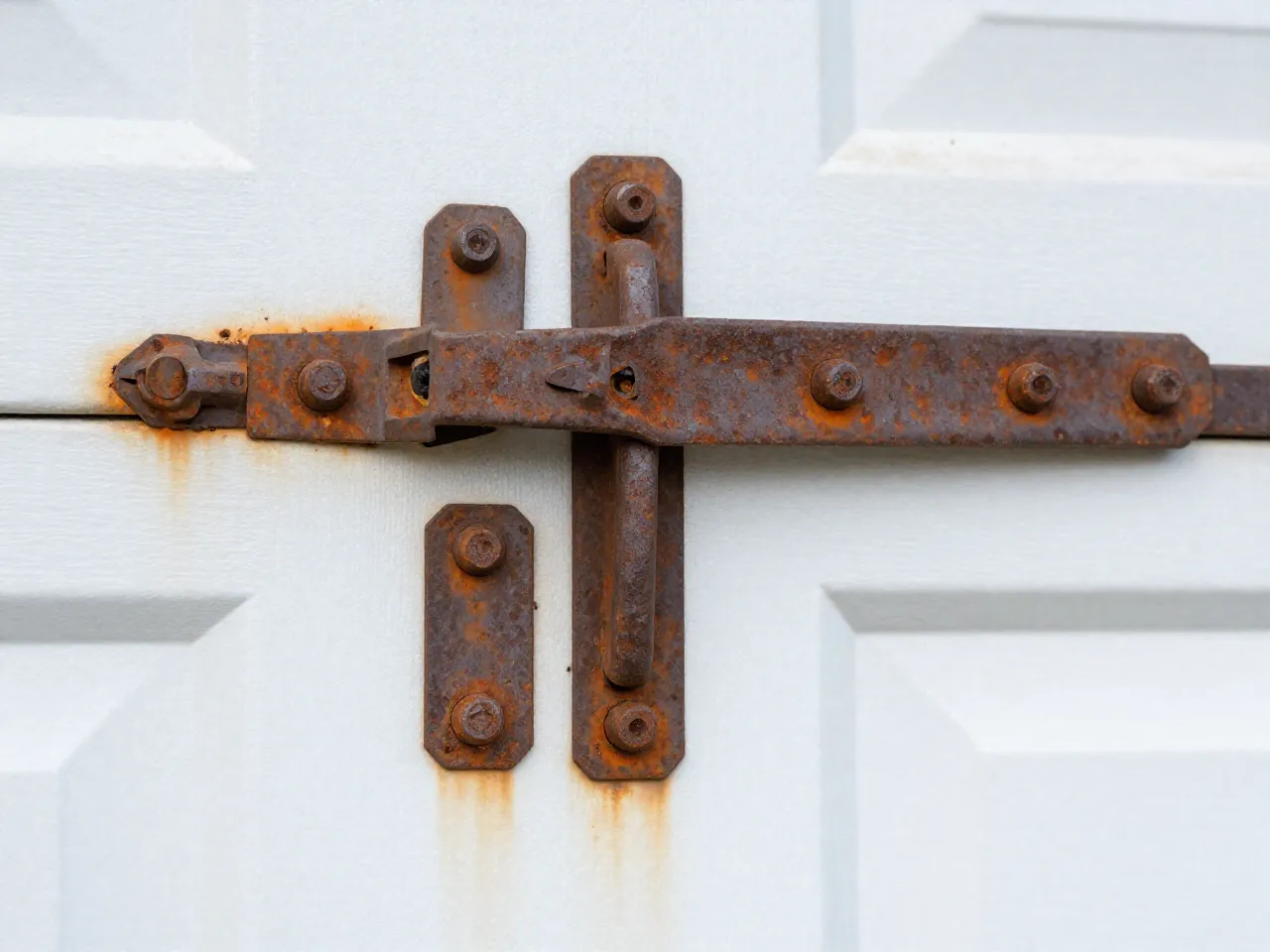
Which parts rust first on a Florida garage door.
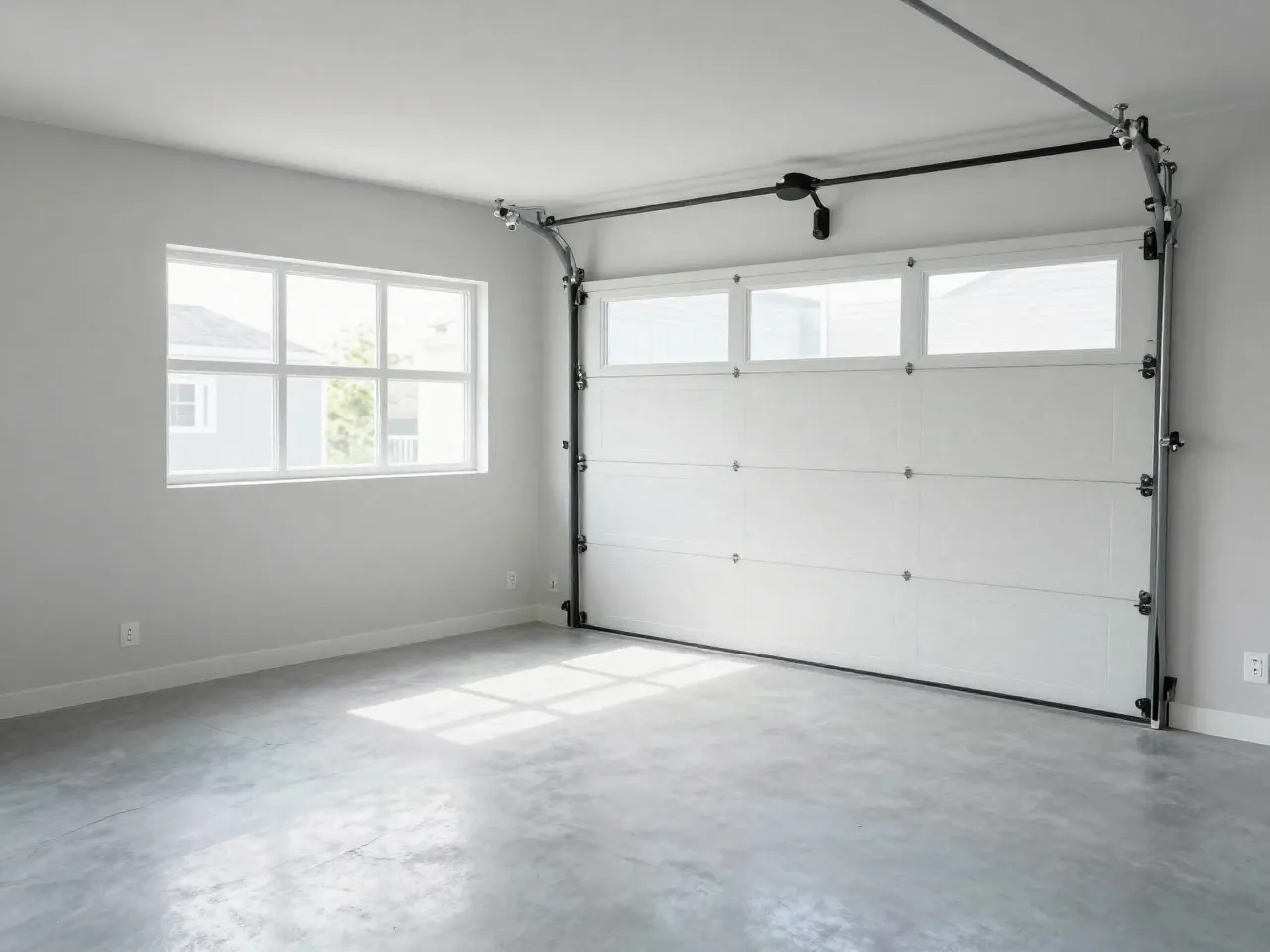
A garage door is mostly steel, and much of that steel is on the inside of the garage. The springs sit above the door. The cables run down each side. The rollers ride in the tracks, and hinges join each panel to the next.
Rust shows up first where water sits and where paint or plating has worn away. The bottom of the door is the usual starting point, because rain, wash water and salt all end up there.
| Part | What rust looks like | Who should handle it |
|---|---|---|
| Springs | Orange or brown crust on the coils, flaking, or coils that look pitted | A technician only. Look, do not touch. |
| Lift cables | Rust stains, stiff spots or broken wire strands, often near the bottom | A technician only. Look, do not touch. |
| Bottom brackets | Rust around the bolts at the lowest corners of the door | A technician only. They hold cable tension. |
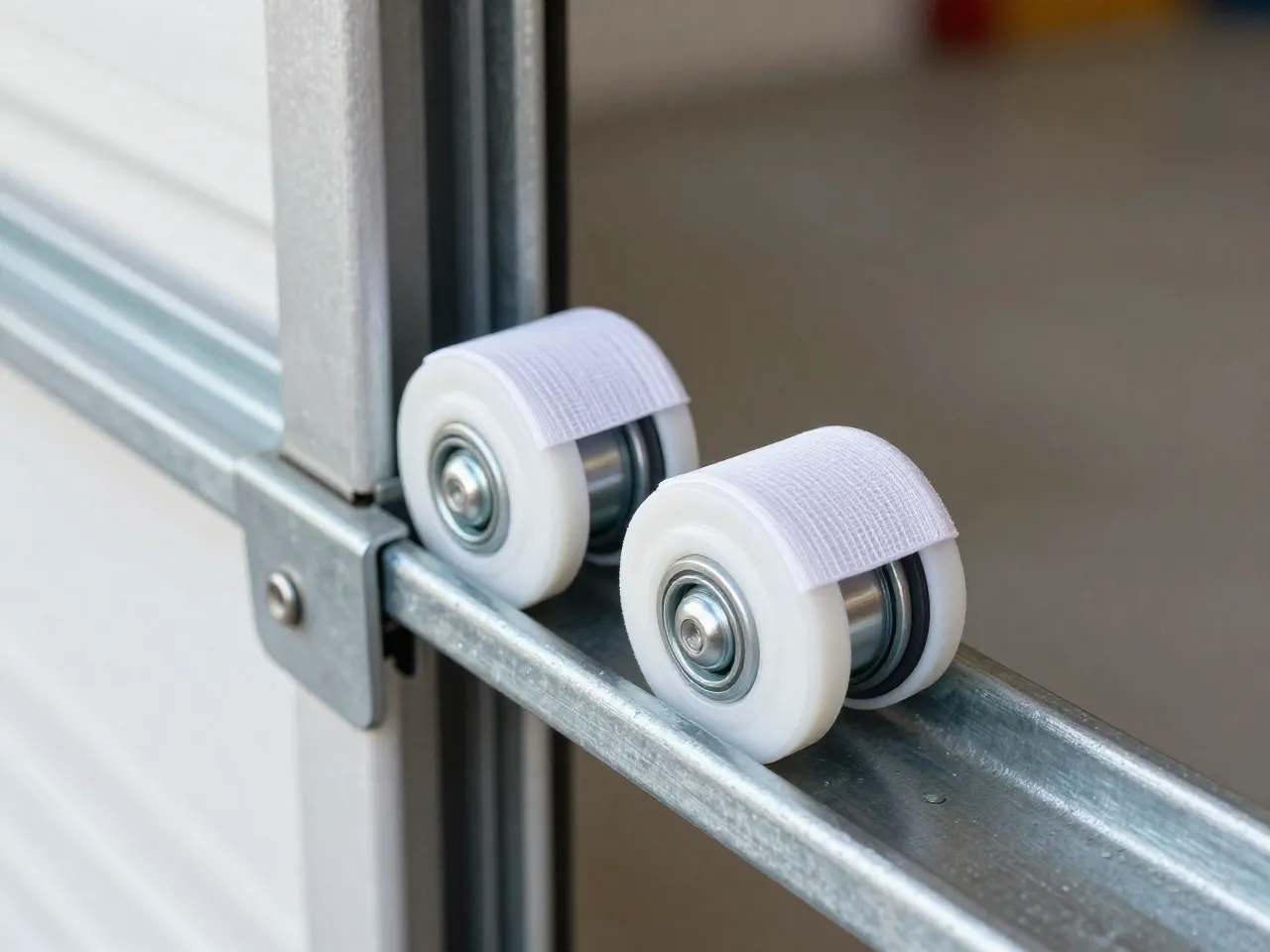
| Rollers and hinges | Rusty stems, noisy rolling, hinges that look swollen or flaky | Clean and lubricate per the maker. A technician replaces them. |
| Tracks | Rust at the base of the vertical tracks where water pools | Keep the floor area clean. A technician handles bent or loose tracks. |
| Fasteners | Rust streaks running down from screws and bolts | Point them out to a technician at the next visit. |
| Panels and bottom edge | Bubbling paint, rust spots, or a crumbling bottom edge | Wash and touch up paint. Deep rust needs a technician to assess. |
Use the table as a guide for what to look at, not for what to take apart. Most of these parts are connected to the springs in some way. If any of them look badly corroded, it is worth having a technician check the whole door, and our guide to garage door repairs in Tampa Bay explains the common fixes.
Rust on garage door springs and cables is a safety issue.
Springs and cables hold the weight of your door. A torsion spring is wound tight on a shaft above the opening, and it stores enough force to lift the whole door. Rust on garage door springs eats into the steel and can create weak points along the coils. A weak spring can snap without warning.
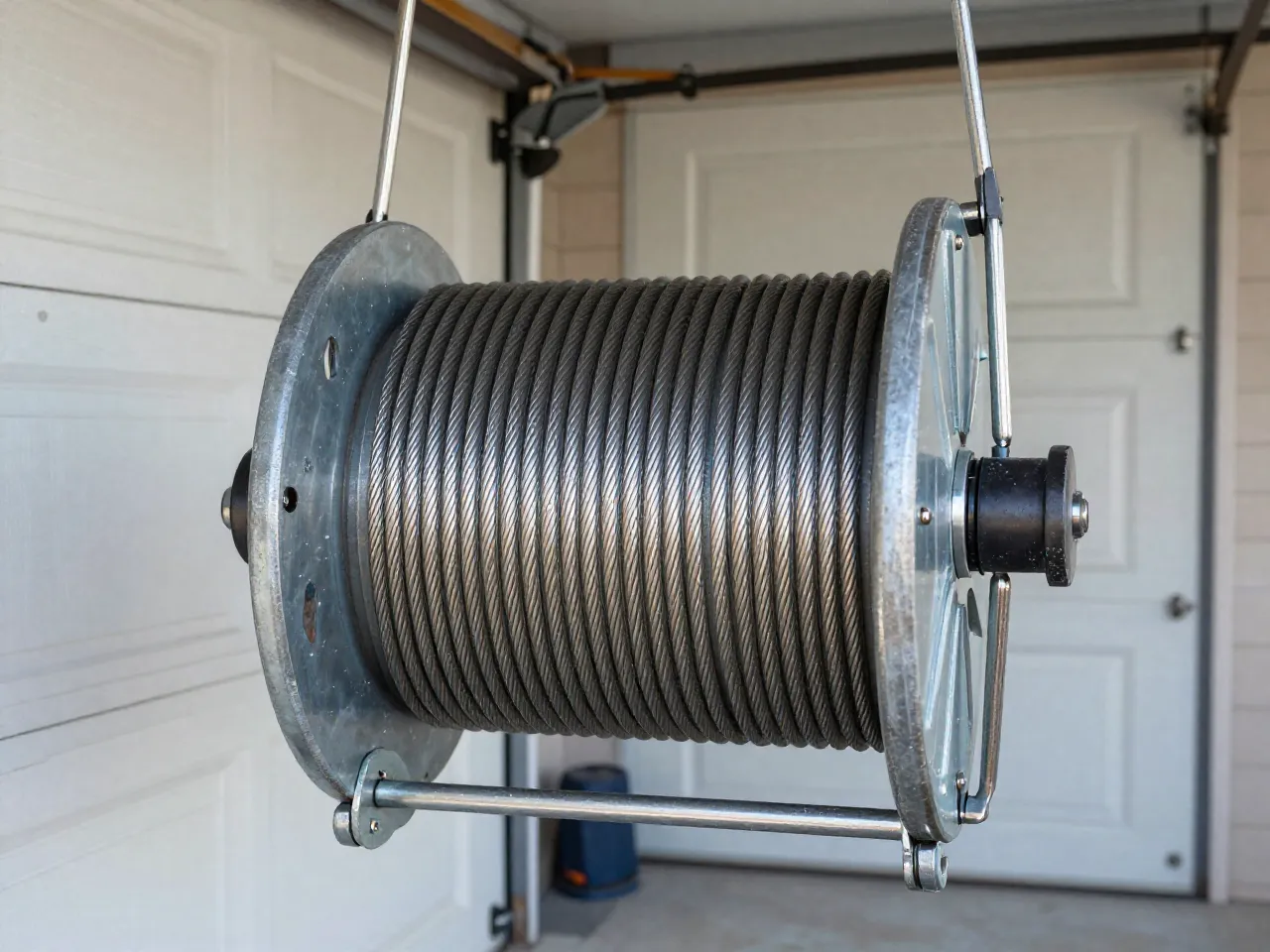
Cables work the same way. They are made of many thin steel wires twisted together, and rust breaks those wires one by one. A rusty cable near the bottom bracket can let go while the door is moving. The door may then drop on one side or jam in the tracks.
If you see rust on the springs, take a photo from the floor and write down when you noticed it. A technician can tell you whether the spring is still sound or due for replacement. Our page on rusted spring repair explains how torsion springs work and what replacement involves. For worn wire near the bottom corners, see frayed cable replacement.
If rust has already caused a problem and the door has jumped out of its tracks, do not try to force it back. The page on off track garage door repair explains why that is a job for a technician too.
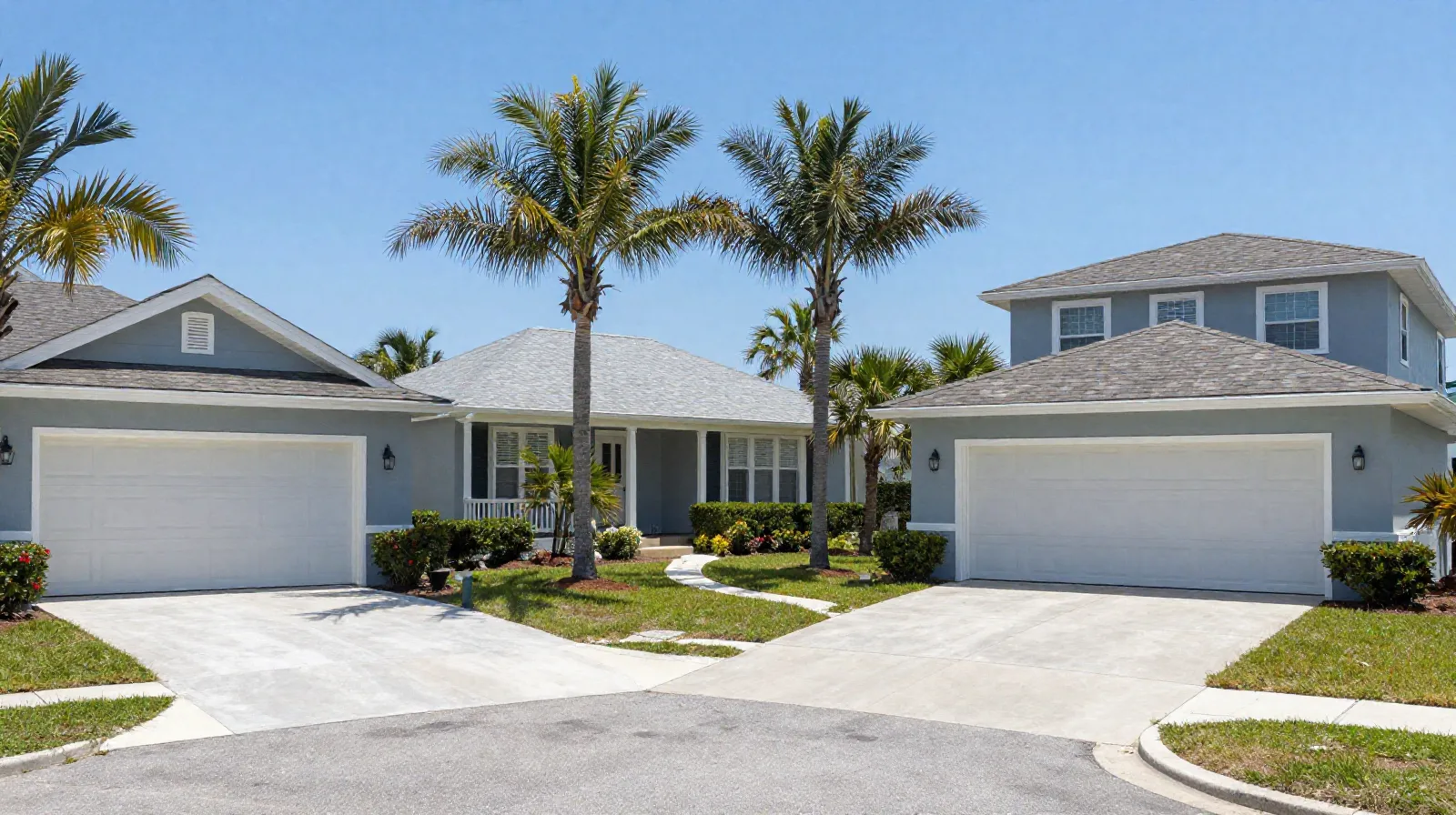
How to clean a garage door near salt air.
Cleaning is the simplest way to slow down garage door rust. Salt and grime hold moisture on the surface. Washing them off gives the paint a better chance of doing its job. Here is a routine you can do yourself, from the outside of a closed door and from the floor inside the garage.
- Step 1Close the door fully and unplug the opener or turn off its power, so nobody runs it while you work.
- Step 2Rinse the outside of the door with a garden hose on a gentle setting. Skip the pressure washer, which can force water into seams and strip paint.
- Step 3Mix a little mild dish soap or car wash soap in a bucket of fresh water.
- Step 4Wash the panels with a soft brush or a sponge, working from the top down.
- Step 5Pay extra attention to the bottom edge and the lowest panel, where salt and dirt collect.
- Step 6Rinse again with fresh water until no soap is left.
- Step 7Dry the door with old towels or a soft cloth, especially along the bottom edge.
- Step 8Wipe the rubber bottom seal and sweep out leaves, sand and standing water from the floor under it.
How often to wash it
A few times a year suits most homes. If you live close to the water or the door faces the wind off the bay, wash it more often. Rinse it after any storm that drives salt spray inland. Avoid harsh cleaners, bleach and abrasive pads on painted steel, because they can wear through the finish and leave bare metal behind.
Keep the garage dry
Moist air inside the garage rusts the springs, rollers and tracks you cannot wash. Open the door or a window on dry days to let air move through. Do not park a wet car in a closed garage for days at a time if you can avoid it. Fix leaks and gutters that send water toward the door. Small changes like these cut down on corrosion inside.
For a fuller seasonal routine, see our garage door maintenance guide for Tampa Bay. The door makers trade group DASMA also publishes a safety and maintenance guide for homeowners.
Lubrication, paint and corrosion control
Clean metal still needs protection. Two simple habits help, light lubrication on the right parts and quick paint touch ups on the panels.
Lubricate the parts that are safe to reach
A garage door lubricant helps keep moisture off moving metal. Follow the guidance from your door or opener maker, since products and advice differ. In general, homeowners can apply a light coat to hinge pivots and roller bearings that are not under tension. Wipe off any extra so it does not collect dust and sand. Do not spray the springs if the maker says not to, and never touch the cables, drums or bottom brackets.
Touch up the paint
Small rust spots on steel panels can often be handled early. Once the door is clean and dry, remove the loose rust with a sanding sponge or wire brush, wipe away the dust and apply a good exterior primer followed by a quality exterior paint. Check the door maker’s guidance first, because some finishes need a specific product. Treat chips as soon as you find them, so salt air has less bare steel to work on.
If your opener has started to strain or the door moves unevenly, rust may be adding friction somewhere. Our page on garage door opener repair explains what to check safely and when to call for help.
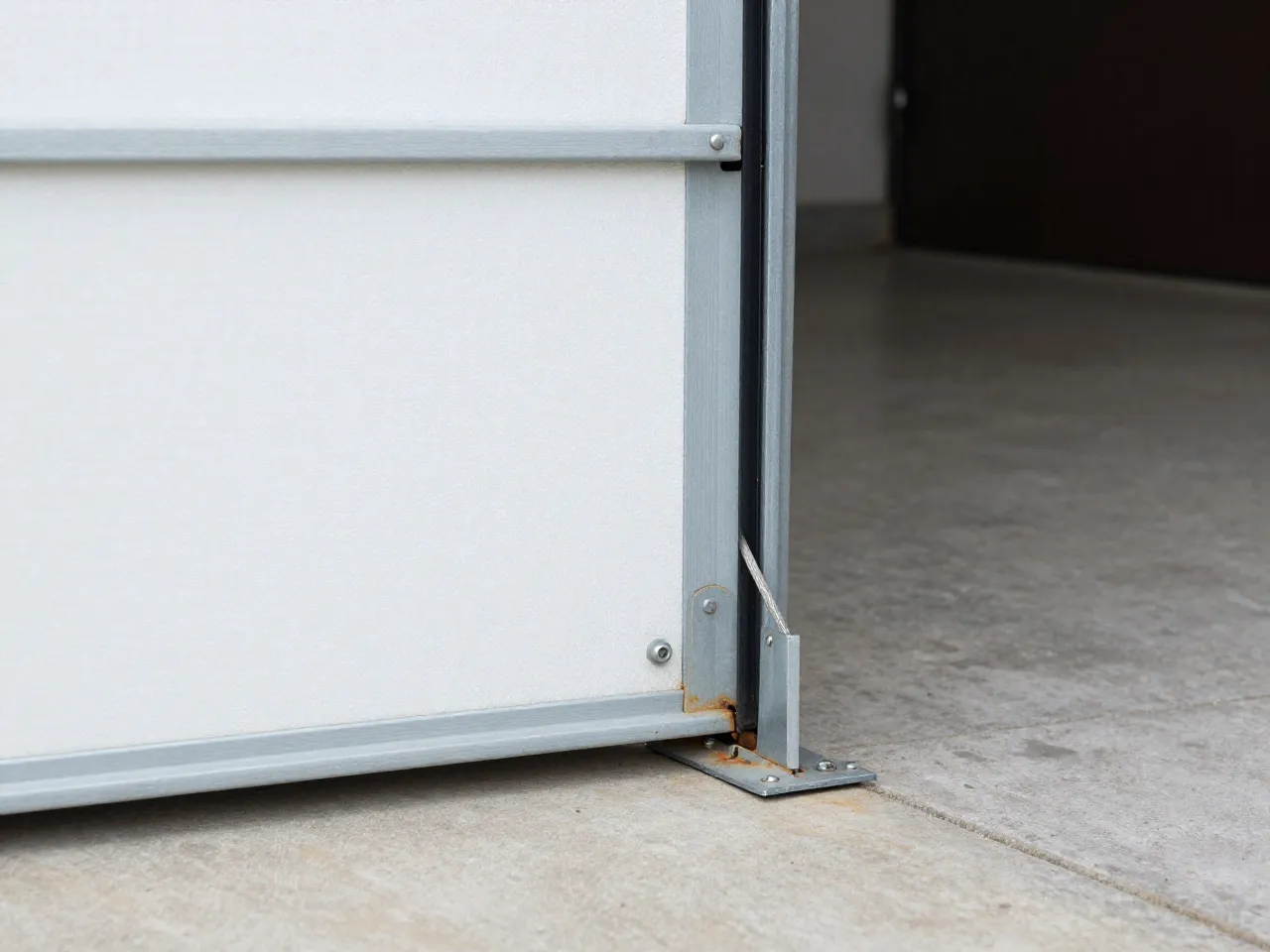
When a rusty garage door needs new parts or a new door.
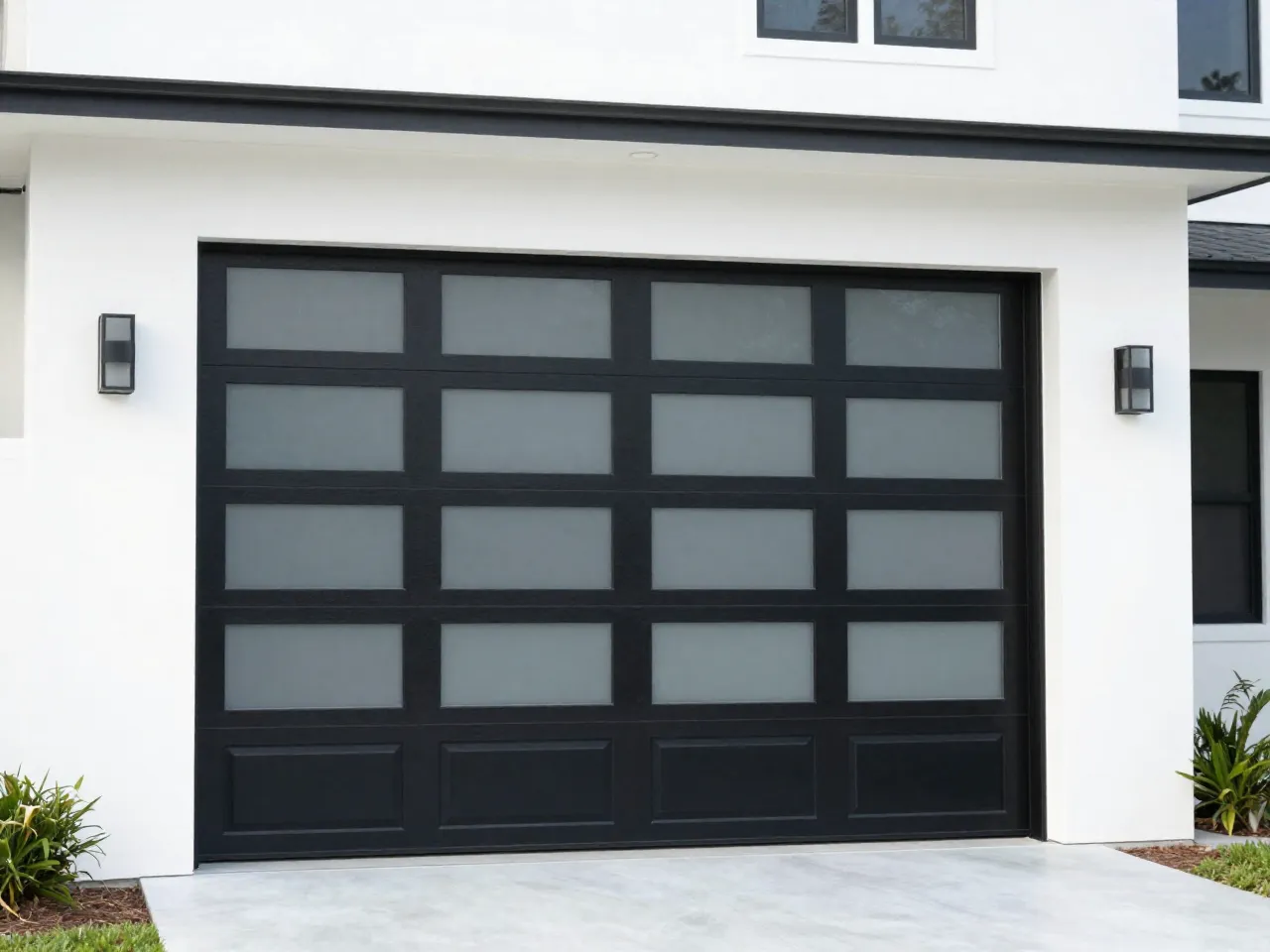
Surface rust that wipes clean or sits only in the paint is usually a cleaning and touch up job. Rust that has eaten through the steel is not. A technician can tell you which parts can stay and which should go.
Springs, cables, rollers, hinges and brackets can all be replaced on their own. A door with sound panels and rusty hardware often just needs new hardware.
Signs the door itself may be done
- Rust has made holes in a panel or along the bottom edge.
- The bottom section is soft, crumbling or bent from corrosion.
- Several panels show rust bubbling up from under the paint.
- The frame or struts that stiffen the door are badly corroded.
When the panels are failing, replacing the whole door can make more sense than repairing it piece by piece. Our page on new garage doors in Tampa Bay walks through the choices. Replacing a door may also need a permit, and the garage door permit guide for Tampa Bay explains how that works.
Materials that cope better near salt
Some materials hold up better than plain steel close to the water. Doors and parts with better coatings, galvanized or stainless hardware, and panels made from aluminum, fiberglass or composite are often suggested for coastal homes. Each has tradeoffs in weight, wind rating and look. Ask which of these are available for your opening, and which suit your home and meet local wind requirements, before you choose.
To get a sense of what different repairs involve before anyone visits, see the garage door repair cost guide.
Rust checks after storms in Pinellas and Hillsborough.
Tropical storms and hurricanes push salt water and spray far inland, and they can leave standing water in garages for days. After the weather clears, give your door a calm look before you use it.
- Look at the door from the driveway. Check that it sits level and the panels are not dented or pushed in.
- Rinse salt spray and debris off the outside with fresh water, then dry it.
- Clear sand, leaves and water from the floor under the door and around the base of the tracks.
- From inside, look at the springs, cables and bottom brackets without touching them. Note any new rust, gaps or loose strands.
- Open the garage to dry it out once it is safe to do so.
- Watch the door over the next few weeks. Fresh rust after a storm often shows up slowly.
Our guide to hurricane garage door care in Tampa Bay covers what to do before and after a storm. For official storm preparation, see the National Hurricane Center, and check Pinellas County for local updates if you live on that side of the bay.
If you notice rust on a spring or cable, or the door does not run right after a storm, you can request garage door service and SpringRight Garage Doors will call you back to set up a visit from one of our technicians. You can also read how SpringRight Garage Doors works or see the areas we cover around Tampa.

Questions
Why does my garage door rust so fast in Florida?
Salt air and humidity are the main reasons. In Tampa Bay, wind off the bay and the Gulf carries salt that settles on metal and holds moisture against it. Constant humidity, rain and warm temperatures keep the steel damp. Any scratch or chip in the paint gives garage door rust an easy place to start.
How do I clean a rusty garage door?
Close the door, turn off the opener and wash the panels with fresh water, mild soap and a soft brush. Rinse and dry it, then clean the bottom seal area. Touch up small rust spots on the panels with primer and exterior paint. Leave rust on springs, cables and bottom brackets to a technician.
Is rust on garage door springs dangerous?
Yes, it can be. Rust weakens the steel coils, and a weak spring can break without warning. Springs hold enough tension to lift the whole door, so never brush, oil or adjust a rusty spring yourself. Take a photo from a safe distance and ask a technician to inspect it.
Can a rusty garage door be painted?
Often yes, if the rust is only on the surface. Clean and dry the door, remove the loose rust with a sanding sponge or wire brush, apply a good exterior primer and finish with a quality exterior paint. Check the door maker’s guidance first. If the rust has made holes or softened the steel, paint will not fix it.
Which garage door materials resist salt air?
Aluminum, fiberglass and composite panels, along with galvanized or stainless hardware, are often suggested for homes near the water. Better coatings on steel doors help too. Each choice has tradeoffs in weight, look and wind rating, so ask which options are available for your opening and what suits your home and local code.
How often should I wash my garage door near the water?
Several times a year is a good habit for coastal homes in St. Petersburg, South Tampa and nearby areas. Rinse it after storms that bring salt spray inland, too. Regular washing removes the salt that speeds up corrosion and helps the paint last longer.
Should I lubricate a rusty garage door?
You can lubricate hinge pivots and roller bearings that are not under tension, using a garage door lubricant as the maker suggests. Wipe off any extra. Do not lubricate the springs if the maker says not to, and never work on cables, drums or bottom brackets. A technician should handle those.