
Garage door cable repair in Tampa Bay.
Garage door cable repair in Tampa starts with one rule. Leave the door where it is. A snapped or loose cable means the door is no longer balanced, and the parts around it still hold a lot of spring tension. Call SpringRight Garage Doors and one of our technicians will secure the door and replace the cable safely.
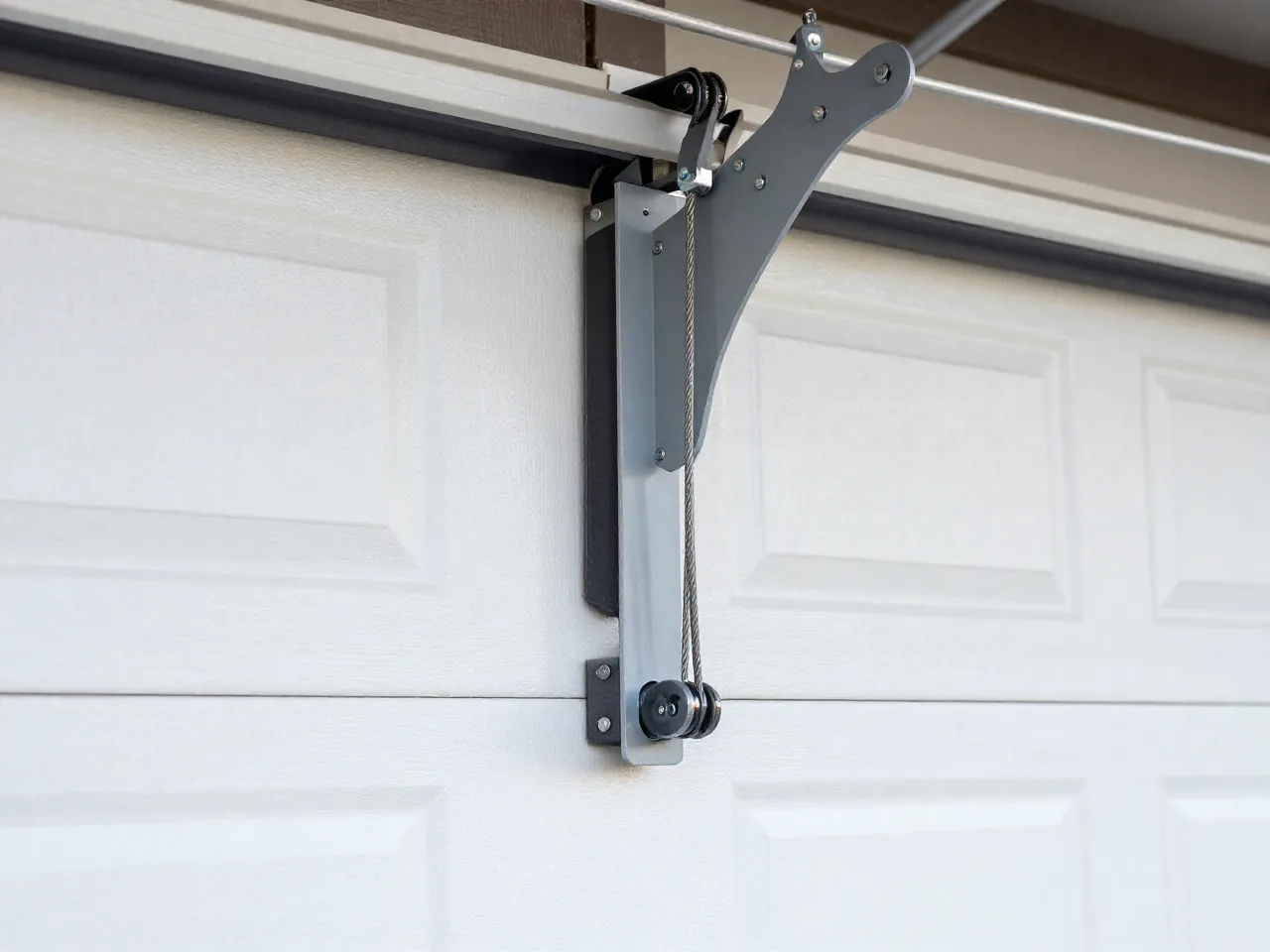
The short answer. Garage door cable repair means replacing the steel lift cables that run from the bottom corners of the door up to the drums or pulleys. If a cable has snapped, frayed or come off the drum, stop using the door. The job involves releasing the spring tension safely, fitting new cables and balancing the door again.
Signs you need cable repair.
- 01
The door hangs crooked
One side sits higher than the other, or the bottom edge is tilted when the door is partly open. That usually means one cable is slack or broken and only one side is still being lifted.
- 02
A cable is hanging loose
You can see a cable dangling beside the track, or it has unwound from the drum at the top of the door. If your garage door cable came off the drum, it will not lift its side of the door.
- 03
Frayed or rusty strands
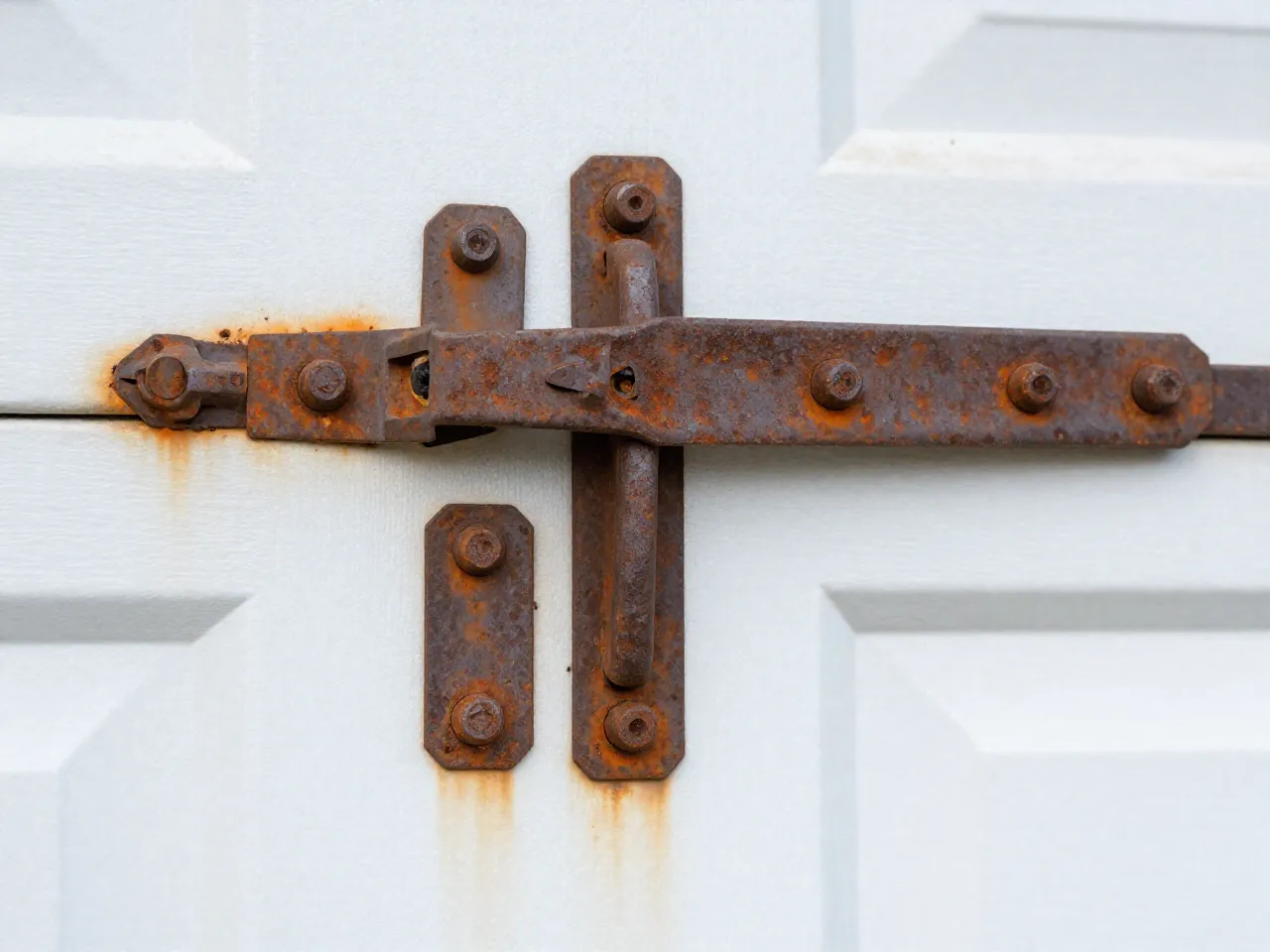
Look at the cable near the bottom bracket, where water and salt collect. Broken wires that stick out, an orange crust of rust or a flattened spot all mean the cable is weak and close to failing.
- 04
The door drops or feels heavy
The door comes down faster than it used to, or the opener groans and stops partway. Cables share the load with the springs, so a worn cable can make the whole door feel wrong.
- 05
A snap and a sudden stop
A garage door cable snapped under load often makes a sharp crack. The door may jam in the tracks at an angle. Do not run the opener again until a technician has looked at it.
Never loosen a cable or a bottom bracket.
Cables and bottom brackets are tied directly to the springs, and the springs store enough force to lift the whole door. Loosening a bracket bolt or pulling a cable off the drum can release that force in an instant. Keep people, pets and cars clear of the door. Do not pull the manual release on a door with a broken cable, because the door can fall. Leave the opener unplugged and let a trained technician handle the tension.
How garage door cables lift your door
Your springs do the heavy lifting, but they cannot touch the door on their own. Garage door cables are the link between them. Each cable is made of many thin steel wires twisted together, and there is one on each side of the door.
The lower end of each cable loops onto a bottom bracket. That bracket is fastened to the lowest corner of the door, right where the door meets the floor. From there the cable runs up beside the vertical track to the top of the opening.
Torsion spring doors use drums
Most newer homes have torsion springs on a steel shaft above the door. A grooved drum sits at each end of that shaft. As the door rises, the springs turn the shaft, and each drum winds its cable into the grooves. As the door closes, the cables unwind under steady tension. Both drums turn together, which is what keeps the door level.
Extension spring doors use pulleys
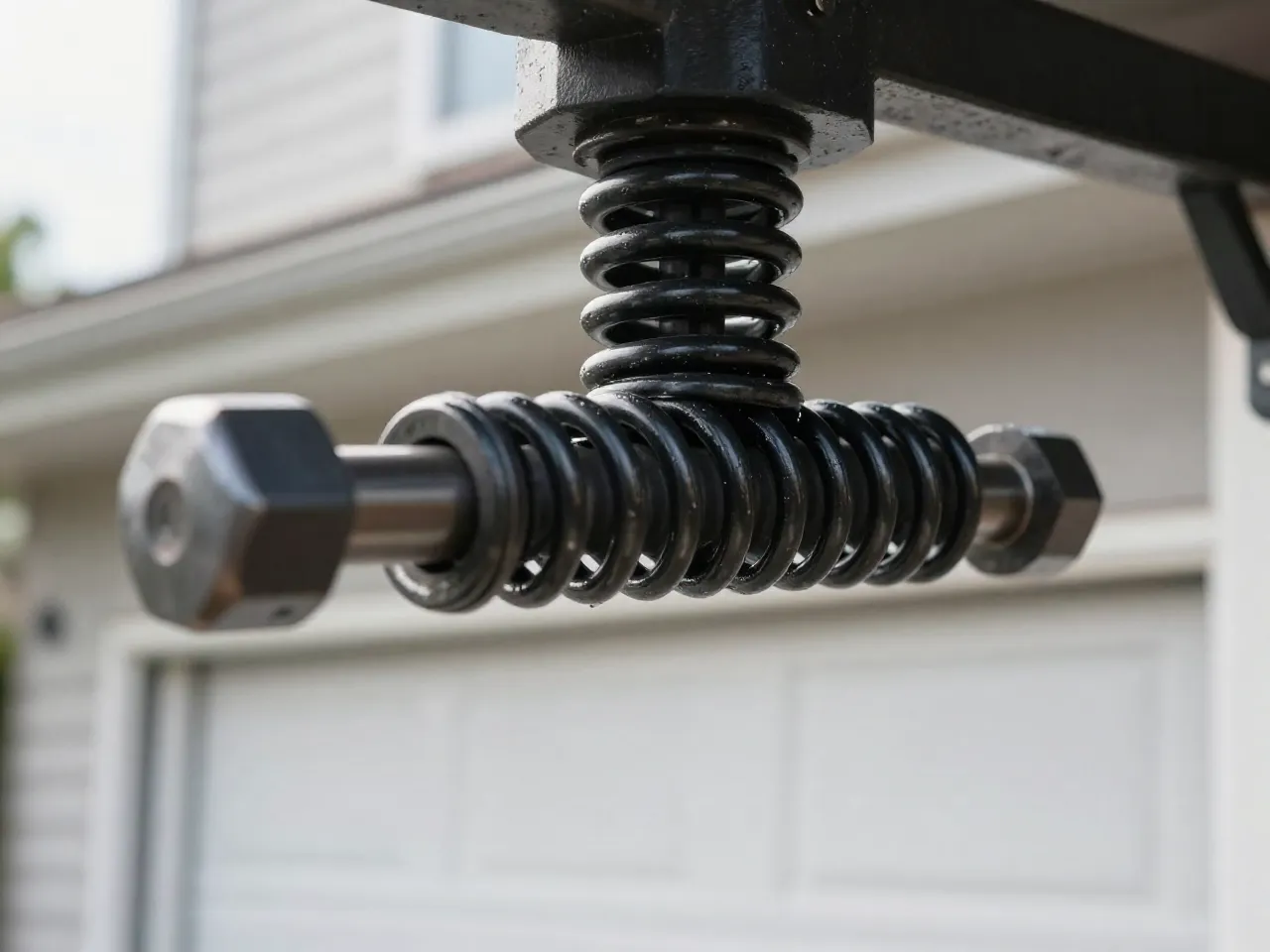
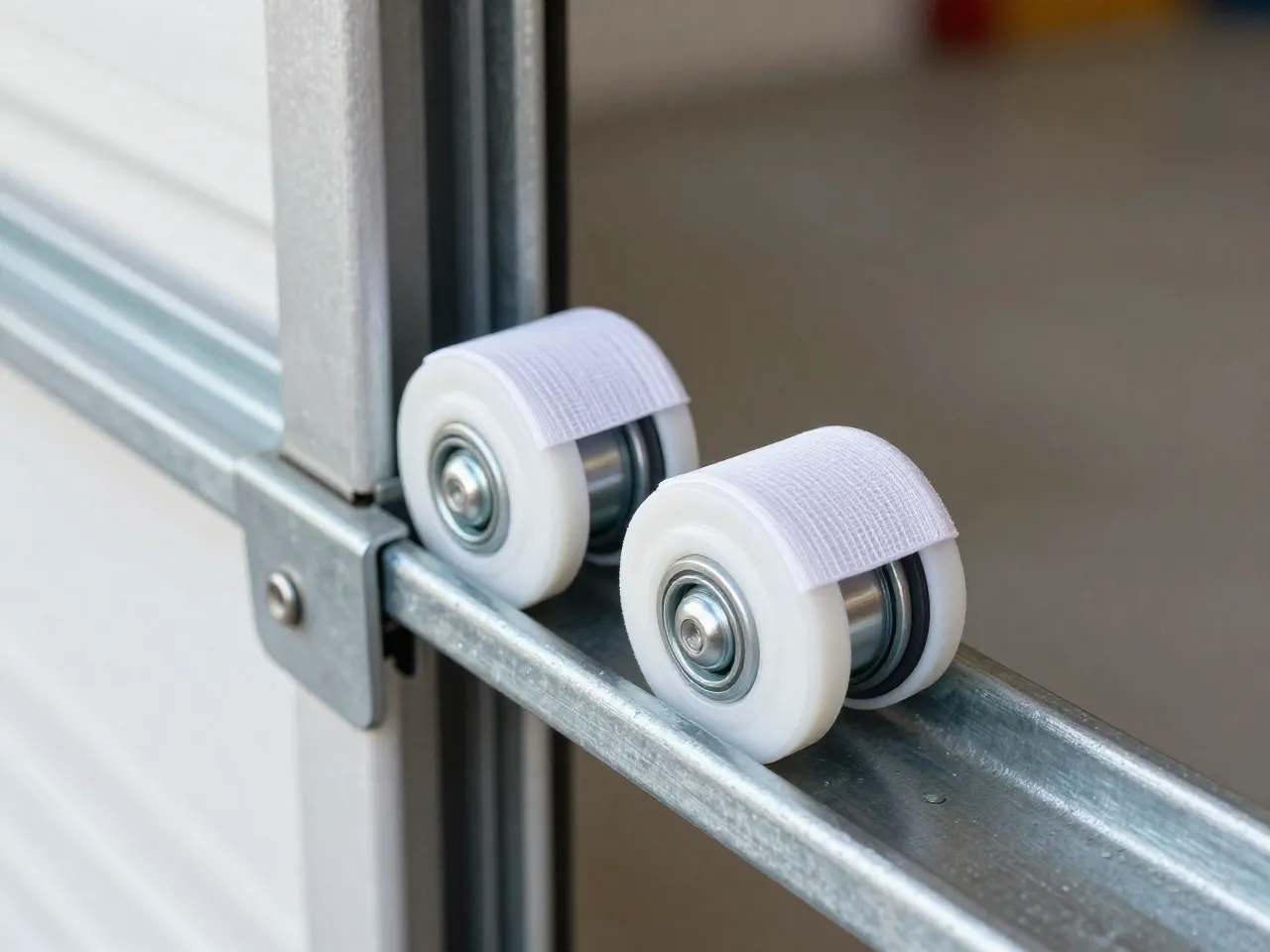
Older and simpler setups often have extension springs that stretch along the horizontal tracks on each side. On these doors the cable runs from the bottom bracket up over a pulley, back along the track and over a second pulley tied to the spring. A worn pulley with a wobbly wheel or a cracked rim can chew through a cable fast, so garage door pulley repair often goes hand in hand with new cables. These doors should also have a safety cable threaded through each spring to catch it if it breaks.
Why they fail together
The springs, the shaft or pulleys, the drums, the cables and the bottom brackets all work as one system. If one part slips, the others take a load they were not built for. That is why our technicians check the whole set and do not just swap a single cable and walk away.
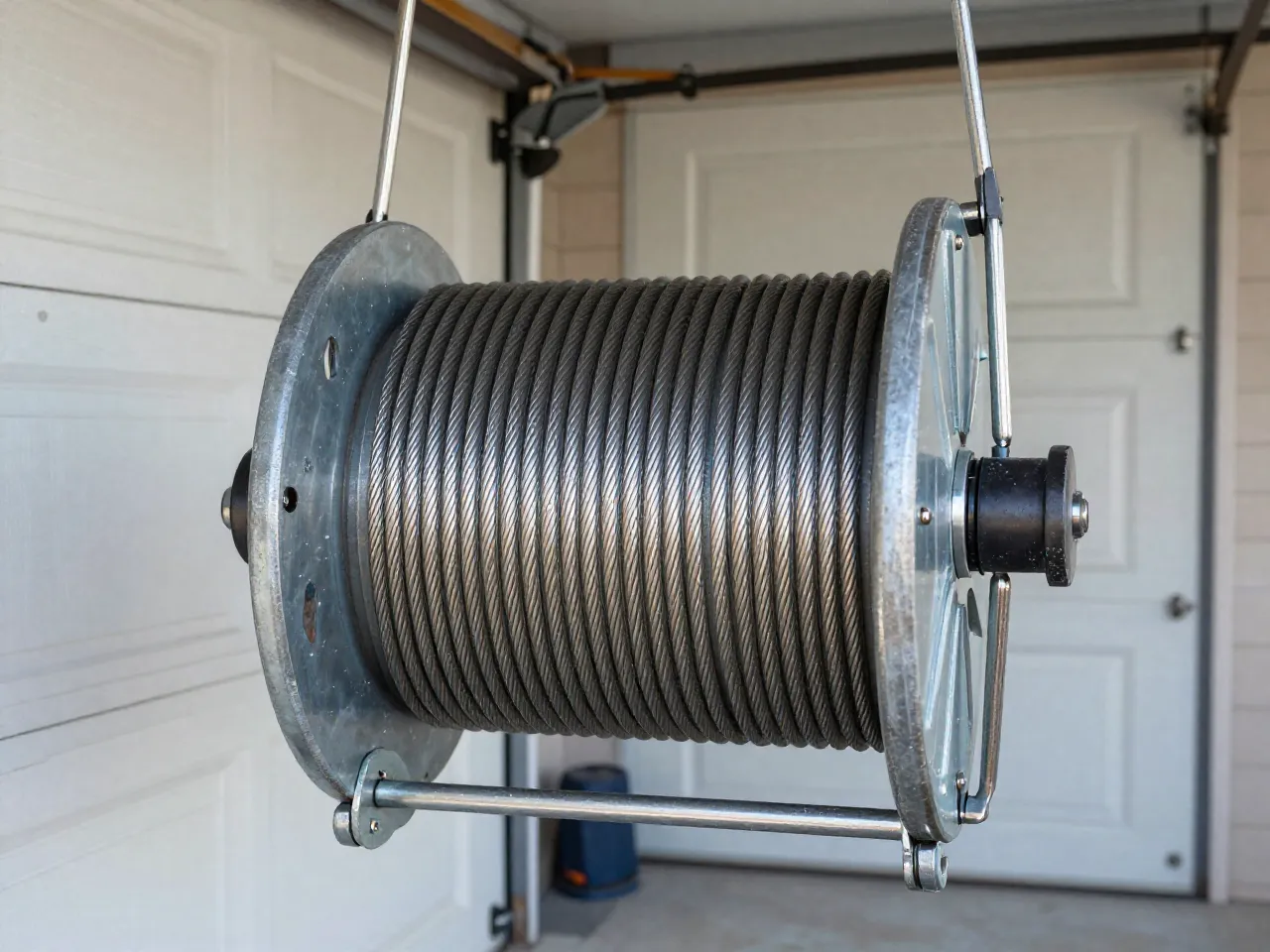
Why a garage door cable snapped or came off the drum.
A broken garage door cable is rarely random. There is almost always a reason, and finding it matters. If the cause is left in place, the new cable can fail the same way.
A spring broke first
This is the most common story. A torsion spring breaks, the shaft loses its tension and the cables go slack. Slack cables can jump out of the drum grooves or unwind completely. Then someone presses the opener, the door tries to move with no spring help, and a cable snaps or tangles. If you heard a loud bang from the garage before the cable trouble started, read our page on garage door spring repair. The cable and the spring usually need attention at the same visit.
The door hit something on the way down
When the bottom of the door lands on a bin, a bike or a toy, the door stops but the drums keep unwinding for a moment. That leaves slack in the cable. Slack lets the cable slip off the drum. The next time the door opens, the cable winds unevenly or not at all.
Rust, wear and a worn bottom bracket
Cables wear where they bend and where they sit near the floor. The bottom bracket area traps rainwater, lawn sprinkler spray and grit. Over time the wires corrode, then fray, then part one by one. A bracket that is rusted thin can also crack or bend and let the cable loose.
Why the door hangs crooked
When one cable fails, the other side is still holding its half of the door. So one corner stays up and the other drops. The rollers bind in the tracks, and the door can wedge itself at an angle. It may look stuck and harmless, but it is under uneven load and can shift without warning. If the door has come out of its track as well, see off track garage door repair.
Garage door cable repair in Tampa humidity and salt air.
Tampa Bay is hard on steel. The air is humid most of the year, summer storms soak everything, and homes near the bay or the Gulf get a fine layer of salt that settles on metal parts. Galvanized cables hold up for a while, but the coating wears off at the bends, and rust starts from the inside of the strands where you cannot see it.
In waterfront parts of St. Petersburg and along the bay shore in South Tampa, cables and bottom brackets often show rust long before the springs give out. Inland in Wesley Chapel or Brandon, the bigger problem tends to be heat and heavy daily use. A two car door that runs several times a day puts a lot of cycles on its cables.
Hurricane season and your cables
Wind pushes on a closed garage door, and the cables and brackets help hold the bottom edge in place. A door with a frayed cable is weaker in a storm. If a storm is coming and you already know a cable is worn, get it looked at early rather than after the wind arrives. The National Hurricane Center preparation guide has a good checklist for getting your home ready, and the garage door belongs on it.
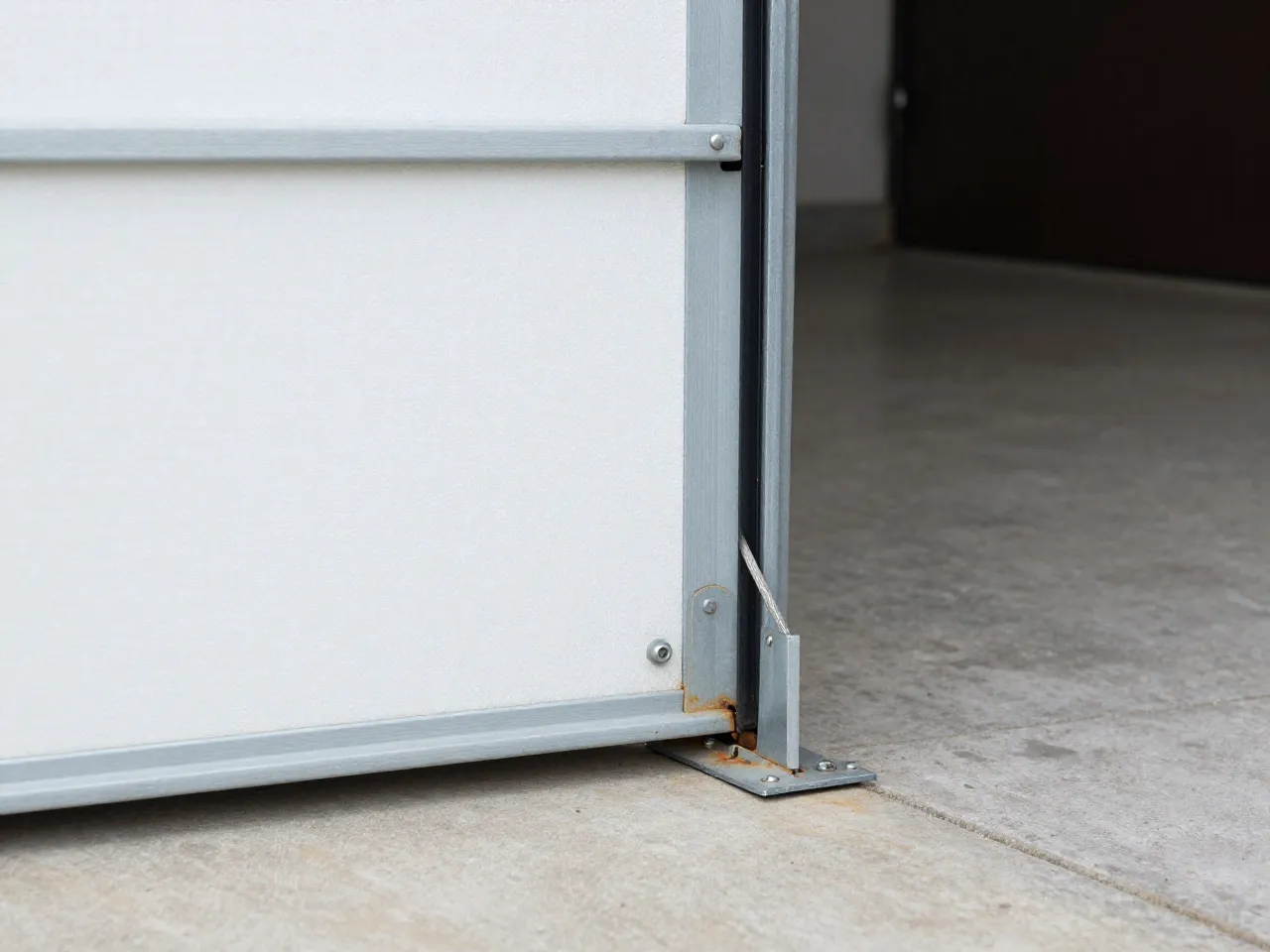
What garage door cable replacement involves
Garage door cable replacement is not a quick swap. Your technician makes the door safe before any cable comes off. Here is what the work generally looks like, so you know what to expect when we arrive.
- Step 1Your technician secures the door so it cannot move, often by clamping the tracks below the rollers.
- Step 2Any remaining spring tension is released with proper winding bars, never by loosening a bracket or a cable.
- Step 3The worn cable comes off, along with the other one if it is worn too, and the drums, pulleys and bottom brackets are checked for rust, cracks and wear.
- Step 4New cables of the right length and size go on, seated in the drum grooves or over the pulleys.
- Step 5The springs are wound or set again, and the technician checks that both cables carry even tension.
- Step 6The door is run up and down and the balance is tested by hand. Before leaving, your technician runs a full cycle and checks the opener settings.
Why the second cable matters too
Both cables have done the same number of trips and lived in the same air. If one has frayed, the other has had the same wear. New cables on both sides also stretch and settle at the same rate, which helps the door stay level. Your technician checks the second cable too and tells you whether replacing both makes sense on your door.
Worn drums and bent bottom brackets are often part of the job. A drum with a chipped groove will throw a new cable off again. A bracket that is rusted through cannot hold the load.
This is also a good time to ask whether a spring is near the end of its life or the opener is working too hard. If the opener has been straining against a broken cable, mention it, and your technician can check whether it needs garage door opener repair too.
Cable, spring or track what the signs point to.
Garage door cables, springs and tracks fail in ways that look alike from inside the garage. This table can help you describe the problem when you ask for help. It is a guide, not a diagnosis, and your technician will confirm what is wrong on site.
| What you notice | Often points to | Where to read more |
|---|---|---|
| Door hangs crooked, one side low | A broken or slack cable | This page |
| Loose cable beside the track | Cable came off the drum or pulley | This page |
| Loud bang, door will not lift | A broken spring | Spring repair |
| Gap in the spring coil above the door | A broken torsion spring | Spring repair |
| Rollers out of the track, door twisted | An off track door | Off track repair |
| Motor hums but nothing moves | An opener or spring problem | Opener repair |
Often more than one thing has gone wrong at once. A spring breaks, a cable comes loose, and the door twists out of its track. That is normal, and it is one more reason not to force the door. For a wider look at every common fault, see the garage door repairs guide.
Garage door cable repair across Tampa Bay.
Requests for garage door cable repair come in from across Hillsborough, Pasco and Pinellas counties. Each part of the bay has its own mix of homes and its own wear patterns, so the local pages go into more detail.
- Garage door cable repair in Tampa covers older bungalows near the river and newer homes further north.
- Cable repair in Brandon for the suburban homes east of the city, where doors see heavy daily use.
- Garage door cable replacement in Wesley Chapel for the newer communities in Pasco County.
- Broken garage door cable help in Lutz for homes on larger lots between Tampa and Pasco.
- Cable and spring repair in Riverview for the newer subdivisions south of Brandon along US 301.
- Garage door cable repair in St. Petersburg where salt air off the water speeds up rust.
- In Hillsborough County east and north of Tampa, see garage door cable repair in Plant City, garage door cable repair in Valrico and garage door cable repair in Temple Terrace.
- In Pasco County, see garage door cable repair in Land O' Lakes and garage door cable repair in New Port Richey.
- In Pinellas County, see garage door cable repair in Clearwater, garage door cable repair in Largo, garage door cable repair in Pinellas Park and garage door cable repair in Palm Harbor.
If your town is not listed, check the full list of Tampa Bay service areas. To understand what changes the price of a job, read the garage door repair cost guide. To see how a request is handled from start to finish, read how SpringRight Garage Doors handles a cable repair.
When you are ready, request garage door cable service and describe what you see. A photo of the cable and the bottom corner of the door helps our technician come prepared.
Cable repair across Tampa Bay
 TampaHillsborough County
 BrandonHillsborough County
 Wesley ChapelPasco County
 LutzHillsborough County
 RiverviewHillsborough County
 St. PetersburgPinellas County
 Plant CityHillsborough County
 Land O' LakesPasco County
- Palm HarborPinellas County
 Pinellas ParkPinellas County
 LargoPinellas County
- New Port RicheyPasco County
- Temple TerraceHillsborough County
 ValricoHillsborough County
 ClearwaterPinellas County
Cable repair questions
What happens when a garage door cable snaps?
The side with the broken cable loses its lift, so the door usually drops on that side and hangs crooked. It may jam in the tracks at an angle. The other cable and the springs still hold tension, so the door can shift suddenly. Keep clear of it, unplug the opener and call us so a technician can secure it.
Can I fix a garage door cable myself?
No, this is not a safe home repair. The cable is attached to a bottom bracket and drum that are loaded by the springs. Taking either off without first releasing the tension can let the door fall or throw a part with great force. A trained technician has the tools and the method to do it safely.
Why did my garage door cable come off the drum?
Slack is almost always the reason. A cable comes off the drum when it loses tension, most often because a spring broke or the door landed on something while closing. A worn drum groove, a bent bottom bracket or an old stretched cable can cause it too. Your technician looks for the cause so it does not happen again.
Should both cables be replaced at once?
It is worth asking. Both garage door cables have the same age and the same exposure to humidity and salt, so if one has failed the other may be worn too. New cables on both sides also share the load evenly, which keeps the door level. Our technician looks at both and tells you what they find.
Is it safe to use the door with a frayed cable?
No. A frayed cable has already lost some of its strength and can snap without warning, often while the door is moving. That can leave the door hanging crooked or let it drop. Stop using the door, keep cars and people out of its path and request a repair before the cable parts.
Is it the cable or the spring?
Often it is both. If the door hangs crooked and a cable is loose, the cable is the visible problem. If you heard a loud bang and see a gap in the spring coil above the door, the spring broke first. Our technician checks the whole system, including the drums, pulleys and bottom brackets.
What affects the cost of garage door cable repair in Tampa?
It depends on what else is damaged. Replacing cables alone is a smaller job than replacing cables along with springs, drums or bottom brackets, and a door that is twisted out of its track takes more work. The type and size of your door matter too. The garage door repair cost guide explains each factor.