
Garage door spring repair in Tampa.
Garage door spring repair in Tampa starts the moment your door feels too heavy to lift or stops a few inches off the floor. Call SpringRight Garage Doors and one of our technicians comes out to replace the broken spring safely and set the door back in balance.
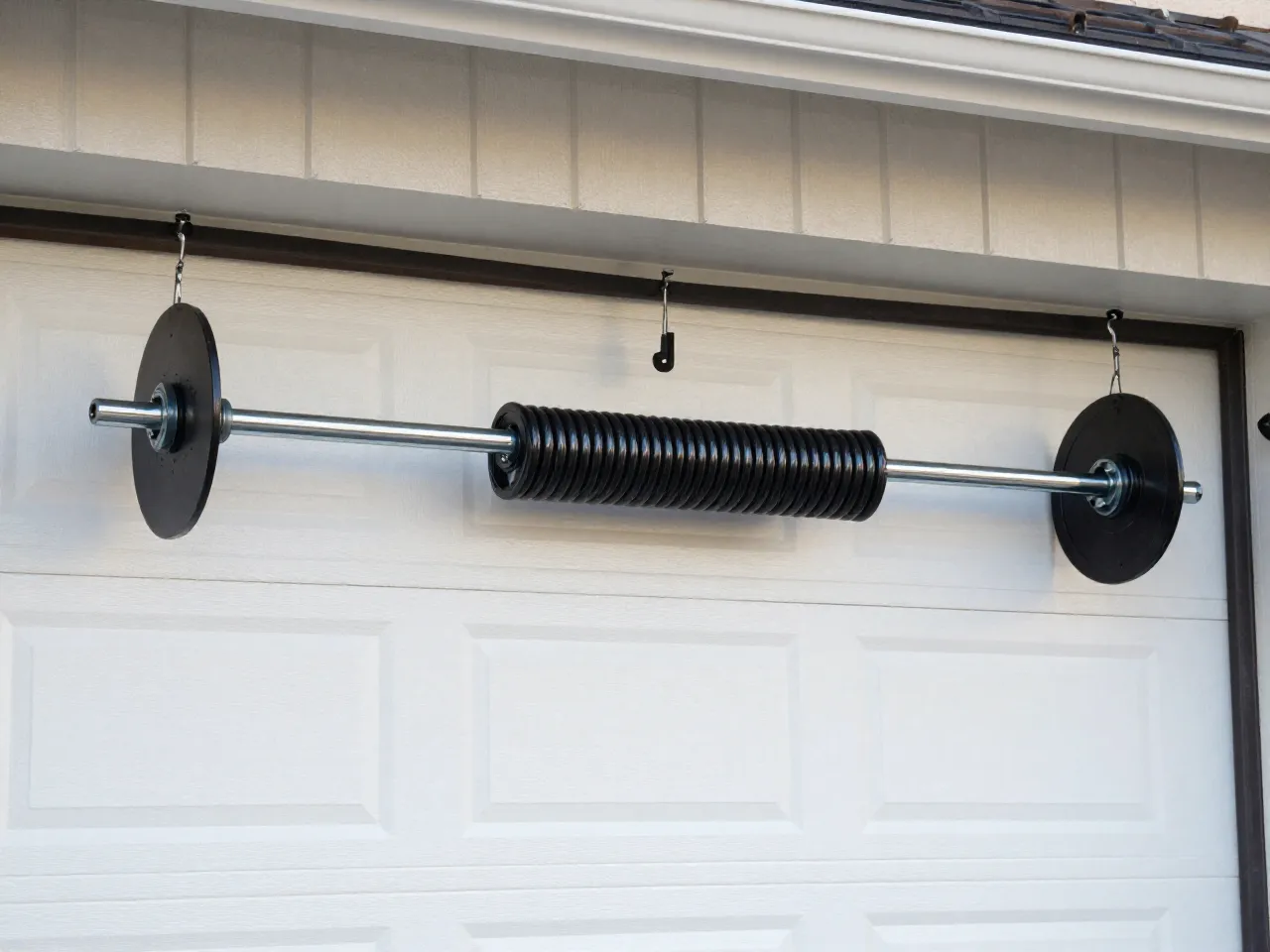
The short answer. If a spring has broken, leave the door where it is and keep the car inside. Garage door spring repair in Tampa means our technician replaces the spring, usually both springs, then adjusts the tension so the door lifts evenly. Springs hold a lot of stored energy, so this is never a job to try yourself.
Signs of a broken garage door spring.
- 01
A loud bang from the garage
A torsion spring often breaks with a sharp crack that sounds like a firecracker. It can happen when nobody is touching the door. Look up at the shaft above the door for a gap in the coil.
- 02
The door is suddenly very heavy
Springs carry almost all of the door’s weight. When one fails, a door that used to lift with one hand can feel like it weighs a few hundred pounds. Do not keep trying to lift it.
- 03
The opener strains or stops
The opener hums, lifts the door a few inches and then reverses or quits. Openers are built to guide a balanced door, not to lift a dead weight. Running it again can damage the motor and gears.
- 04
The door rises crooked
One side lifts before the other, or the door sits at an angle when it stops. That can mean a broken spring on one side, a loose cable or a cable that has slipped off its drum.
- 05
Slack cables or a stretched coil
On doors with extension springs you may see a spring hanging loose along the track, or a cable lying limp. A rusty, gapped or stretched coil is a sign the spring is near the end of its life.
Leave the springs to a technician.
Garage door springs are wound or stretched under enough tension to lift the whole door. A spring, cable or bracket that lets go can cause serious injury. Do not loosen set screws, wind bars or bottom brackets, and do not pull the manual release while a spring is broken, because the door can drop. Keep children and pets out of the garage until the door has been repaired.
Garage door springs and how they lift your door.
Your opener does not really lift the door. The springs do. They are set so the door feels close to weightless, and the opener just guides it up and down. That is why a door with a broken spring will not move, even though the motor still runs.
Most homes in the Tampa area have one of two systems. A garage door torsion spring sits on a steel shaft across the top of the door opening. It twists as the door closes and unwinds as the door opens, turning drums that wind the lift cables. Extension springs run along the horizontal tracks on each side of the door. They stretch as the door closes and pull back as it opens.
| Torsion springs | Extension springs | |
|---|---|---|
| Where they sit | On a shaft above the door opening | Above each horizontal track, one on each side |
| How they work | Twist and unwind to turn the cable drums | Stretch and contract to pull on the cables |
| When one breaks | Often a loud bang and a visible gap in the coil | The spring may hang loose or come apart |
| Safety parts | The shaft holds the spring in place | A safety cable should run through each spring |
| Common on | Most newer and heavier doors | Many older and lighter doors |
Both kinds do the same job, and both are dangerous to handle. The tension that lifts a two car door is stored in the coils whether the door is up or down. Only someone with the right winding bars, clamps and training should adjust or replace them.
If you are not sure which type you have, stand inside the garage with the door closed and look up. A thick coil on a bar over the door is torsion. Long springs running front to back near the ceiling tracks are extension. If you are still not sure, call us and describe what you see, and we can help you work it out.
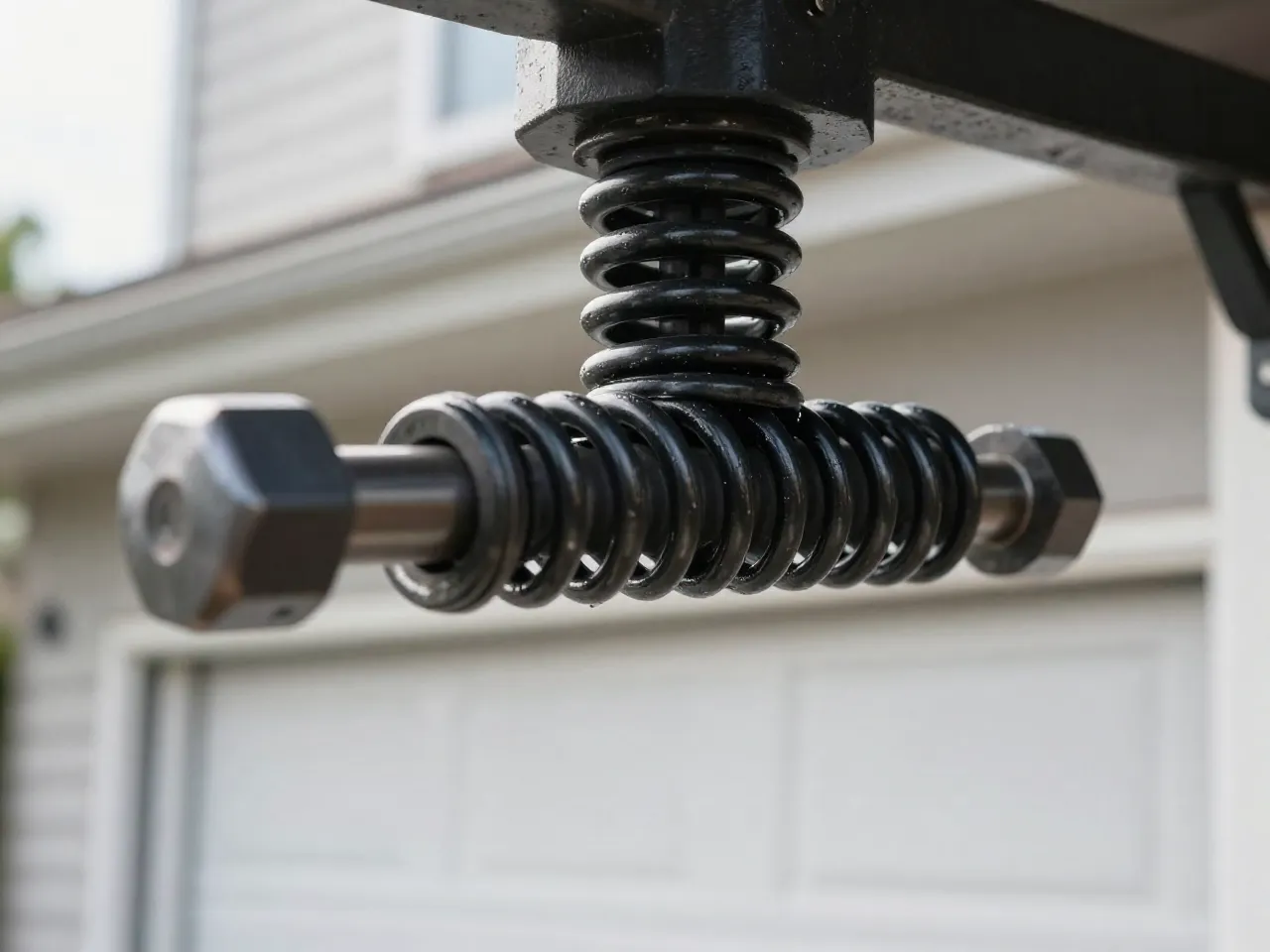
Why a garage door spring broke in a Tampa Bay garage.
Every spring is made for a limited number of cycles. One cycle is the door going up and coming back down once. Many standard springs are rated for about ten thousand cycles. If your family uses the garage as the front door, opening it four or five times a day, you can reach that sooner than you might expect.
Once the steel has flexed enough times, it fatigues and cracks, often near the end of the coil. That is why a garage door spring broke on a quiet morning with nobody near it. It was simply worn out.
Humidity and salt air
Florida is hard on steel. High humidity most of the year, summer storms and salt air near Tampa Bay and the Gulf all help rust form on the coils. Rust adds friction between the coils and eats into the wire, so the spring weakens faster. Homes close to the water in St. Petersburg and along the bay shore often see more corrosion on springs, cables and hardware than homes farther inland.
You can slow this down. Keep the garage as dry as you can, and ask your technician during a visit whether a light coat of garage door lubricant on the springs makes sense for your door. Never spray or wipe a spring while the door is moving.
Heat, weight and balance
Long, hot summers and a door that was never properly balanced also shorten spring life. A door that drifts up or slams down puts extra strain on the springs and on the opener. Adding insulation or a new panel can change the door’s weight, and the springs need to be matched to that weight.
What garage door spring repair involves on a visit in Tampa.
A spring repair visit follows a careful order. Our technician measures the old springs, releases any stored tension safely and fits springs that match the weight and height of your door. Here is what usually happens.
- Step 1Your technician looks over the door, the springs, the cables, the drums and the opener before touching anything.
- Step 2The door is secured so it cannot move, and any remaining tension in the old springs is released with proper winding bars.
- Step 3The old springs are measured for wire size, length and inside diameter so the new ones match your door.
- Step 4New springs are installed and wound or set to the right tension for your door.
- Step 5Cables, drums, rollers and bearings are checked for wear at the same time.
- Step 6The door is balanced, the opener force and travel are checked, and the safety reverse is tested.
A good visit ends with a door that lifts smoothly and stays put when it is halfway open. Before your technician leaves, ask what was replaced and why, and whether anything else is close to failing.
Sometimes the spring is not the only problem. A spring that snaps can throw a cable off its drum, and a door that was forced up with a broken spring can bend a track. If a cable is frayed or loose, you may also need broken garage door cable repair. If the door has slipped out of its tracks, read about garage door off track repair before anyone tries to move it.
If the opener was strained trying to lift a heavy door, it may need attention too. Our guide to garage door opener repair covers the safe checks you can do yourself, like the wall button, the lock switch and the photo eyes. You can also see every common problem on the garage door repairs page.
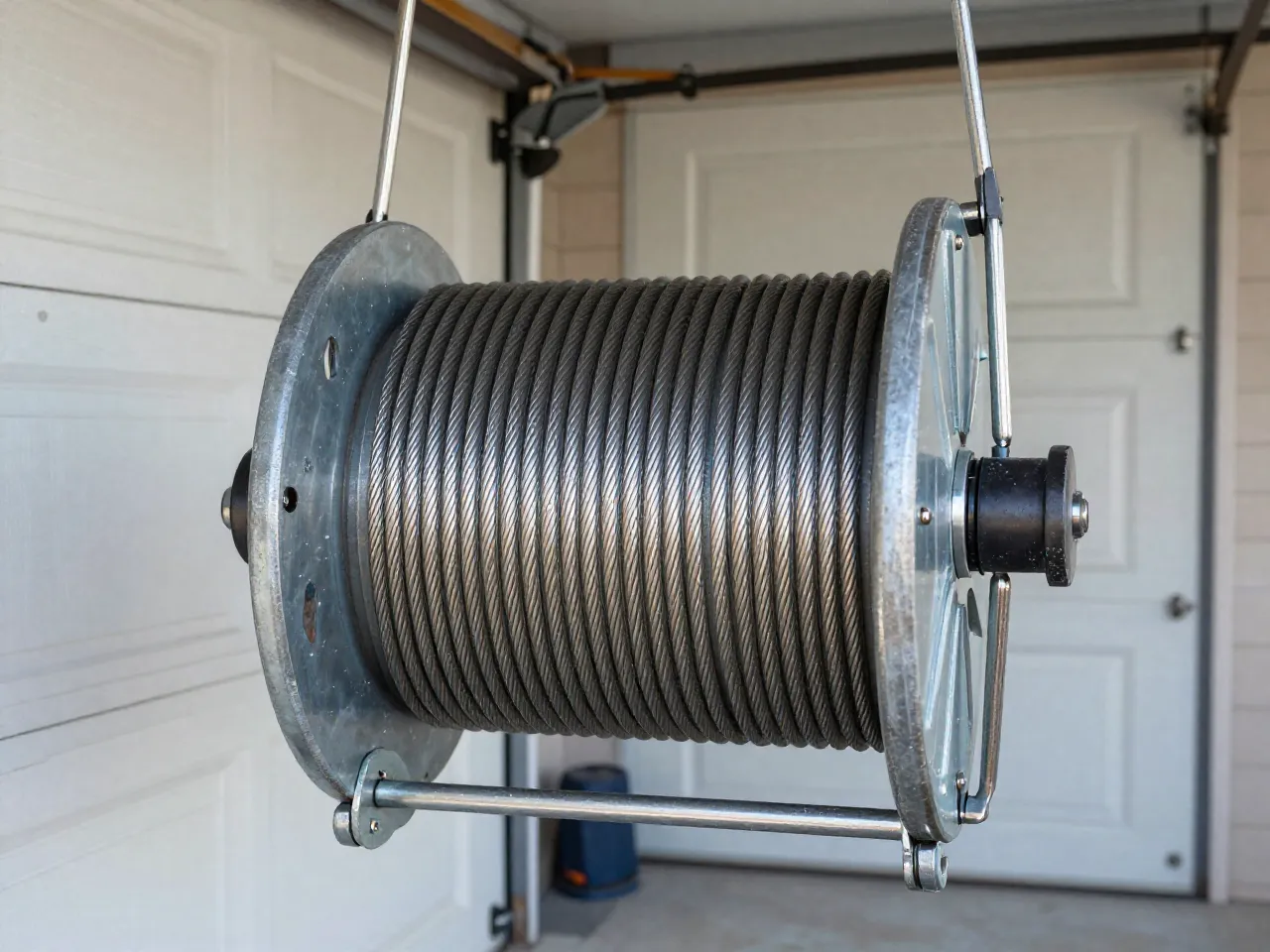
Torsion spring replacement and why both springs go together.
Many doors have two springs, one on each side of the center bracket for torsion systems, or one per track for extension systems. They went in together and have done the same number of cycles. When one breaks, the other is usually close behind.
That is why door makers such as Clopay advise garage door spring replacement in pairs, and why our technicians replace both springs and rebalance the door. Replacing both at once keeps the tension even on each side, which helps the door lift straight. It also means one visit instead of two, and you are less likely to hear that bang again a few weeks later.
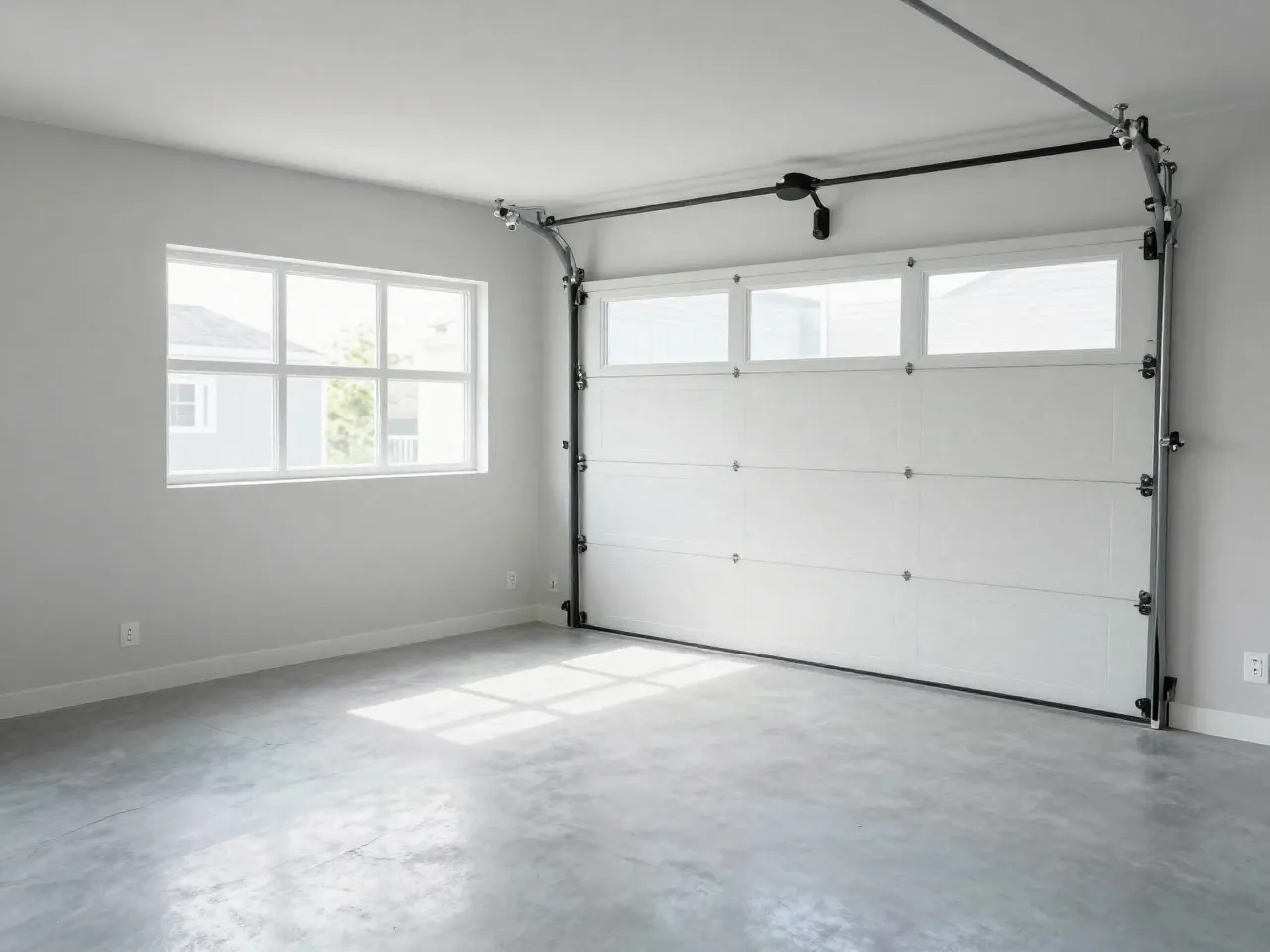
Torsion spring replacement is also a good time to look at the rest of the system. Worn rollers, dry bearings and frayed cables all add load to new springs. Fixing small problems now can help the new springs last longer.
If your door is old, dented or was damaged in a storm, your technician can tell you plainly whether a repair still makes sense. A newer, lighter or wind rated door may change which springs you need. You can read more about new garage doors and replacement before you decide.
Some older doors still use extension springs without safety cables. A safety cable runs through the middle of each extension spring so that if the spring breaks, the pieces stay on the cable instead of flying across the garage. If yours has none, we can talk with you about adding them, or about converting to a torsion system. The door industry group DASMA publishes general garage door safety information that is worth a read.
Garage door spring repair across Tampa Bay.
We take spring repair calls from all over Hillsborough, Pasco and Pinellas counties. The homes are different from one area to the next, and so are the doors. Each area page explains what local homes tend to have and the problems that come up most often there.
- In the suburbs east of the city, many homes have two car doors that get used every day. See garage door spring repair in Brandon.
- North of Tampa in Pasco County, many newer homes have heavier insulated doors. See garage door spring replacement in Wesley Chapel.
- Homes around the lakes north of the city range from older ranches to newer builds. See torsion spring replacement in Lutz.
- Along the Alafia River southeast of Tampa, growing neighborhoods see a lot of daily door use. See broken spring repair in Riverview.
- Across the bay, salt air near the water is hard on springs and hardware. See garage door spring repair in St. Petersburg.
- In Hillsborough County east and north of Tampa, see garage door spring repair in Plant City, garage door spring repair in Valrico and garage door spring repair in Temple Terrace.
- In Pasco County, see garage door spring repair in Land O' Lakes and garage door spring repair in New Port Richey.
- In Pinellas County, see garage door spring repair in Clearwater, garage door spring repair in Largo, garage door spring repair in Pinellas Park and garage door spring repair in Palm Harbor.
For the city itself and every area nearby, start at the Tampa garage door repair page, or see the full list of Tampa Bay service areas.
Storms matter here too. Strong wind can push on a garage door, and a door that is out of balance or has a weak spring may not close and lock the way it should. Before hurricane season, it is worth making sure your door opens, closes and latches properly. The National Hurricane Center has a clear guide to getting your home ready.
What shapes the cost of a broken garage door spring in Hillsborough and beyond.
Every door is different, so the price of a spring repair depends on what your technician finds. Your technician explains the price, and what it includes, before any work starts.
- Whether your door uses torsion springs or extension springs.
- How many springs need replacing, and whether both are changed together.
- The size and weight of the door, which sets the size of the springs.
- Whether cables, drums, rollers or bearings also need replacing.
- Whether the opener or tracks were damaged when the spring failed.
For a fuller picture of how repair prices are worked out, read the garage door repair cost guide. It explains the parts and labor that go into each kind of job, without guesswork.
When you are ready, request garage door spring service online or call. You can also read how SpringRight Garage Doors works to see what happens after you reach out, or browse the garage door questions and answers page.
Spring repair across Tampa Bay
 TampaHillsborough County
 BrandonHillsborough County
 Wesley ChapelPasco County
 LutzHillsborough County
 RiverviewHillsborough County
 St. PetersburgPinellas County
 Plant CityHillsborough County
 Land O' LakesPasco County
- Palm HarborPinellas County
- Pinellas ParkPinellas County
 LargoPinellas County
 New Port RicheyPasco County
- Temple TerraceHillsborough County
 ValricoHillsborough County
 ClearwaterPinellas County
Spring repair questions
How long do garage door springs last?
Most garage door springs last several years, but it depends on how often you use the door. Springs are rated in cycles, and one cycle is one trip up and down. A door used many times a day wears its springs out sooner. In Tampa Bay, humidity and salt air can add rust that shortens their life further.
How much does it cost to replace garage door springs?
The cost depends on your door, so a fair price comes after our technician sees it. The type of spring, the number of springs, the weight of the door and any extra parts like cables or rollers all play a part. Our garage door spring repair cost guide explains each of these in plain terms.
Can I replace a garage door spring myself?
No, this is a job for a trained technician. Garage door springs store enough energy to lift the whole door, and releasing that energy the wrong way can break bones or worse. Winding bars, clamps and the right replacement springs are all needed. Safe homeowner checks are limited to looking, listening and leaving the door closed.
Should both springs be replaced at the same time?
Yes, in most cases both springs should be replaced together. They were installed at the same time and have done the same number of cycles, so the second one is usually close to breaking. Replacing both keeps the tension even, helps the door lift straight and saves you a second visit later.
Is it safe to open a garage door with a broken spring?
No, it is not safe. Without a working spring the full weight of the door rests on the cables, the opener and whoever is lifting it. The door can drop without warning. Leave it closed, do not pull the manual release, and call us so a technician can look at it first.
What is the difference between torsion and extension springs?
A garage door torsion spring sits on a shaft above the door and twists to lift it. Extension springs run along the side tracks and stretch to do the same job. Torsion systems are common on newer and heavier doors. Extension springs are common on older doors and should always have safety cables running through them.
Does salt air near Tampa Bay wear out springs faster?
Yes, salt air and humidity can speed up rust on garage door springs. Homes near the water in St. Petersburg and along the bay often see more corrosion on coils, cables and hardware. Keeping the garage dry and having the springs looked at during any visit helps you catch wear before a spring breaks.